Orchard Farm


Farming for the long term
Our starting point is productive agriculture.
Orchard Farm is a working family farm, and our aim is to develop a diverse and resilient farming system that can be sustained, adapted and improved from one generation to the next.
Our farming combines livestock, arable crops, permanent grassland, hay, orchard crops and organically grown vegetables. At the heart of the livestock enterprise is our developing flock of Romney sheep, managed predominantly through a grass-based system.
The flock is rotationally grazed across a series of paddocks, giving pasture time to recover while supporting animal welfare, forage production and the condition of the land. Our permanent grassland also provides hay for winter feeding, helping us make greater use of what the farm itself can produce.
Across our arable and vegetable crops, we are increasingly interested in how crop choice, soil management and biological approaches can build fertility, improve resilience and maintain productive land over the long term.
Good farm management, healthy soils and careful stewardship of the farm's resources underpin the way we farm.


Leaving the land stronger
For us, regenerative agriculture comes down to a simple question:
Can each generation leave the farm in better condition than it found it?
That means seeing Orchard Farm as a connected farming system rather than a collection of separate fields and activities.
Livestock, crops, soils, water, trees, hedgerows, insects and wildlife all influence one another. Grazing affects vegetation and soil structure. Cropping influences fertility and biological activity. Healthy soils improve water retention and nutrient cycling. Trees, hedgerows and field margins provide shelter, habitat and connections across the landscape.
The better we understand those relationships, the better the decisions we can make about both the productivity of the farm and the health of the land.

Our strategic priorities
Our long-term approach is centred on five priorities:
-
Develop a diverse farming system — grow the Romney breeding flock and maintain a productive balance of livestock, grassland, arable crops, forage, orchard crops and organically grown vegetables.
-
Build healthier soils — use grazing, cropping and land management to improve soil structure, fertility and biological activity, recognising healthy soil as the foundation of productive farming.
-
Make biodiversity part of the farm — strengthen hedgerows and wildlife corridors, expand wildflower-rich areas, protect pond and wetland habitats, improve woodland diversity and plant around 100 indigenous trees each year.
-
Become more self-reliant and resource-efficient — make greater use of home-grown forage and crops, use water and energy carefully and reduce dependence on bought-in resources where it makes agricultural and economic sense.
-
Use science and technology intelligently — follow advances in soil and crop science, agricultural bioscience, data and farm technology, and make effective use of renewable electricity generated by our solar array.
These priorities are deliberately interconnected. Healthier soils support better grassland and crops. Livestock contribute to the management of pasture. Hedgerows, trees and wildflower areas strengthen the wider ecology of the farm. Renewable energy reduces reliance on external resources. Science can help us understand and improve the system as a whole.
Our ambition is not simply to minimise our impact on the environment. It is to improve the productive and ecological foundations of Orchard Farm, so that the land becomes richer, healthier and more resilient over time.


Energy, science and innovation
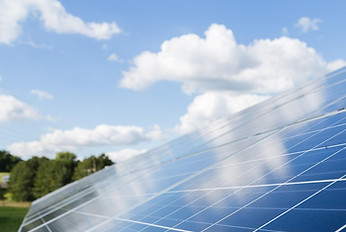
Orchard Farm already generates renewable electricity through its solar array, making energy generation part of the farm's wider approach to resilience and responsible resource use.
We are also interested in how agricultural science, bioscience, data and emerging technologies can help us understand the farm better and make more informed decisions about soils, crops, livestock and resources.
But innovation has to earn its place. We will adopt new ideas and technologies where they offer a clear agricultural, ecological or practical benefit and remain appropriate to the scale and character of Orchard Farm.
For us, the future of farming lies neither in rejecting tradition nor in pursuing technology for its own sake. It lies in combining good farming, practical experience, sound science and a deeper understanding of the land.